*This post contains affiliate links.
Hi everyone, it’s Twilife.
We built our custom home with Sumitomo Forestry (a major Japanese builder) in 2025.
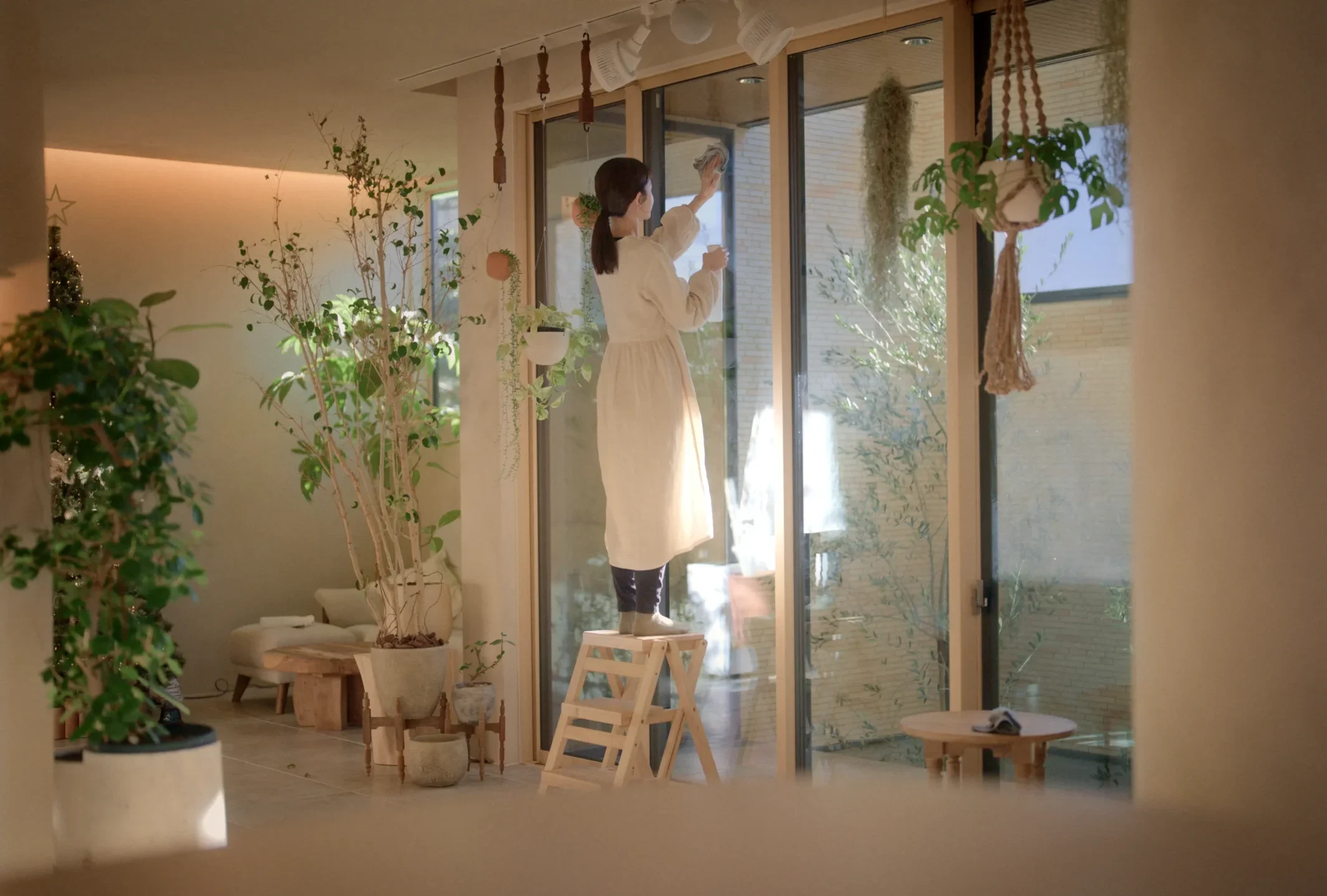
Among the many optional upgrades we chose, the one we appreciate most every single day is the 2.8m (9’2″) high ceilings.
The standard ceiling height for Sumitomo Forestry is 2.4m, but you can optionally raise it up to 2.8m.
Compared to other major builders in Japan (for example, Sekisui House offered up to 2.7m), 2.8m is an exceptionally high standard.
This impressive height limit was actually one of the deciding factors for us choosing Sumitomo Forestry.
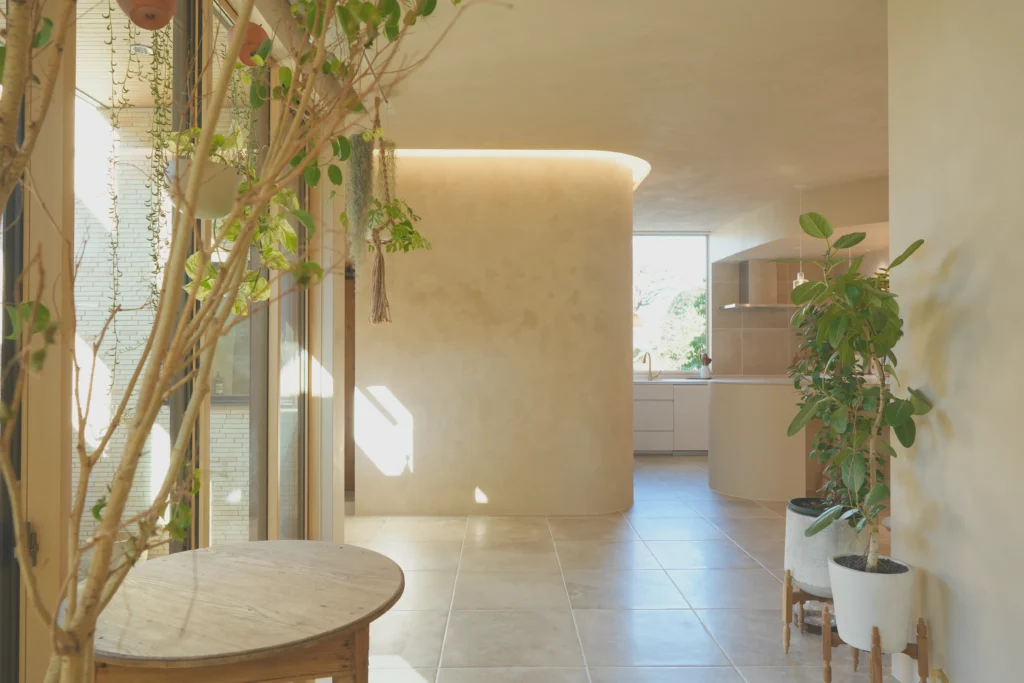
However, simply saying “we can raise the ceilings” hides several unexpected traps.
If you only find out about these limitations later, you might end up with huge regrets. Today, I want to share the real-life challenges and crucial points to watch out for when opting for high ceilings.
1. Can the Entire Floor Be Raised?
When researching ceiling heights online, you’ll likely find many builders and comparison sites boasting heights of “3.0m” or even more.
But here is the catch.
Even if they claim high ceilings are possible, there are often hidden “conditions” attached.
- Only applicable in sunken living rooms (lowered floors)
- Only available in split-level areas
- Exposed structural beams on the ceiling are required
- Prominent supporting pillars are required in the middle of the room
In this regard, we felt Sumitomo Forestry’s design capabilities were top-tier because they allow you to raise the ceiling of the entire floor seamlessly.
*Of course, there may be structural limitations depending on your specific floor plan, so always consult with your architect.
When evaluating builders, we highly recommend asking: “How high can the ceilings actually go?” and “What are the structural conditions (pillars, beams, floor level changes) required to achieve it?” before proceeding with the design.
2. The Biggest Trap: Zoning Restrictions
No matter how advanced a builder’s technology is for raising ceilings, how high you can actually build on your plot of land is heavily dictated by local Japanese zoning laws regarding sunlight access, known as “Slant Line Restrictions.”
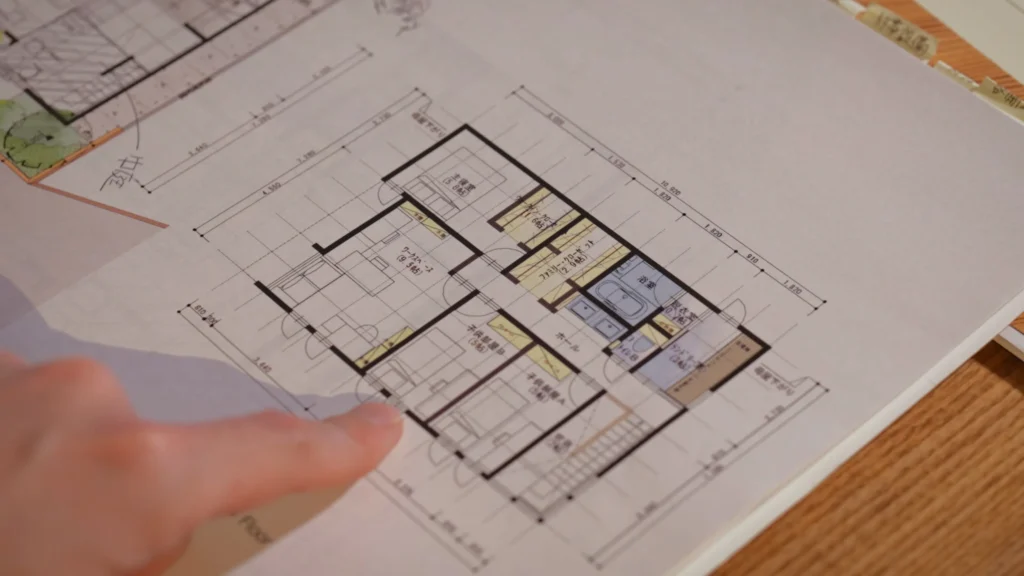
These strict building codes are designed to ensure neighboring properties receive adequate sunlight and ventilation.
These regulations tend to be especially strict in quiet residential areas zoned as “Low-rise exclusive residential districts.”
I was initially completely unaware of this and cheerfully requested, “Let’s do 2.8m for the ground floor open-concept living area!” only to be told…
“Due to the slant line height restrictions on this plot, it’s highly likely we can’t do that.”
Hearing this shocking fact from our architect was devastating.
Since high ceilings were a major reason we chose this builder, it was a bolt from the blue, and we were heartbroken for days…
When it seemed we couldn’t raise the ceiling, our proposed compromise was to “lower the floor by 40cm (creating a sunken floor) to virtually achieve a 2.8m space.”
However, this came with several significant disadvantages:
- The under-floor crawl space becomes too cramped, making future maintenance difficult.
- It severely limits plumbing and pipe layout options.
- It creates unavoidable structural steps along the walls.
We struggled with this compromise with mixed feelings. But in the end, by a stroke of pure luck, the plot of land we purchased happened to clear the restrictions, and we successfully raised the ceilings without issue.
This is something you absolutely must know beforehand to avoid deep regret.
If you are looking for land with a builder or real estate agent, we strongly advise you to check if the sunlight height restrictions are lenient enough to allow high ceilings from the very beginning of your land hunt.
3. Limited Choices for Doors & Windows
When you raise the ceiling, you inevitably run into sizing issues with your fixtures (doors and windows).
The Pitfall of “Full-Height Doors”
One of the great appeals of Sumitomo Forestry is that floor-to-ceiling doors (full-height doors) are standard.
It allows you to easily create a seamless, minimalist space without hanging walls (bulkheads) above the doors.
However, the standard height for these doors is 2.4m.
This means if you raise the ceiling to 2.8m, you are left with a 40cm hanging wall above the door, defeating the whole purpose of a “full-height” door.
For our 2.8m ground floor living space, we opted for a bold “doorless design,” which saved us from this issue. But the real problem arose with the “windows.”
Large Windows Are Not Tall Enough
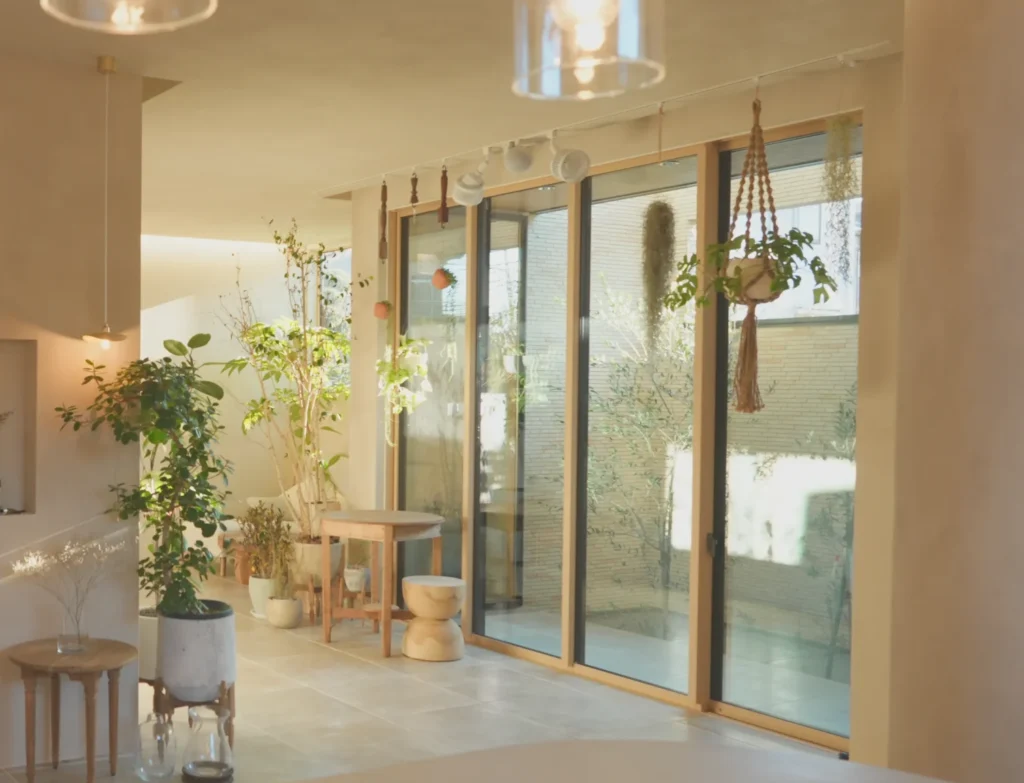
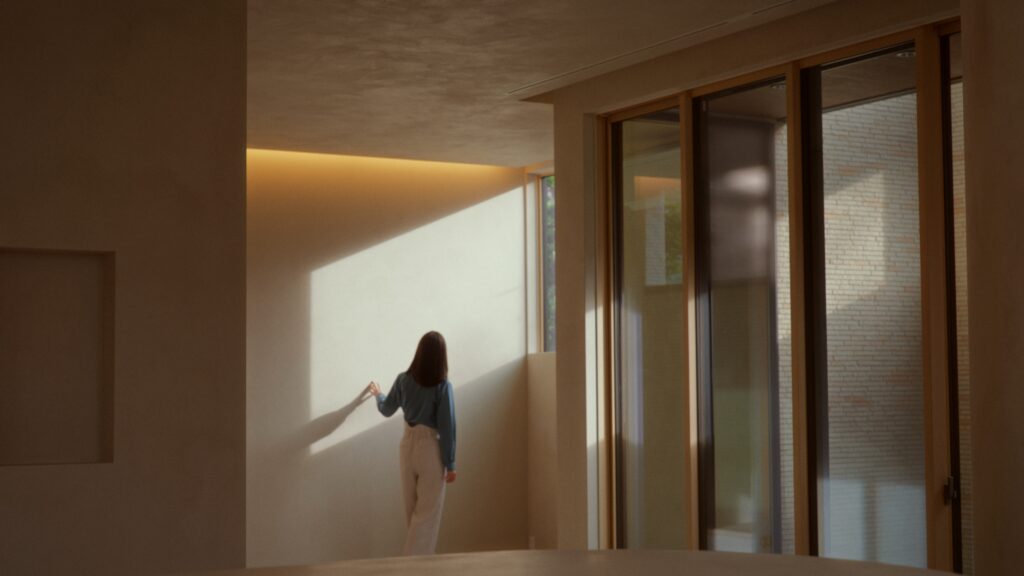
Initially, for the large sliding patio doors connecting the living room to the courtyard terrace, we wanted “2.8m ceiling-height windows” to create a seamless visual flow from the indoor ceiling out to the exterior eaves.
However, after checking with the manufacturers, our architect told us:
“They make products up to 2.7m tall, but 2.8m simply doesn’t exist.”
I will never forget the moment he started the conversation with, “I have some sad news…”
We were forced to choose from these three options:
- 1. Lower the ceiling specifically around the window to make it look floor-to-ceiling.
- 2. Raise the floor specifically around the window to make it look floor-to-ceiling.
- 3. Give up on ceiling-height windows and accept a hanging wall above them.
After agonizing over it, we chose “Option 3: Give up on the ceiling-height window and create a hanging wall.”
While I really wanted to see the seamless transition from the ceiling to the eaves, compared to the overwhelming spaciousness of a 2.8m ceiling, a small hanging wall felt trivial. We are fully satisfied with our choice now.
Window Trouble Discovered After Construction Began
However, our bad luck didn’t end there.
Shortly after compromising on the 2.7m window, we found out that while the main casement windows facing the courtyard could be ordered at 2.7m, the adjacent “fixed picture window” on the left didn’t even exist in a 2.7m size. And we only found this out AFTER construction had started.
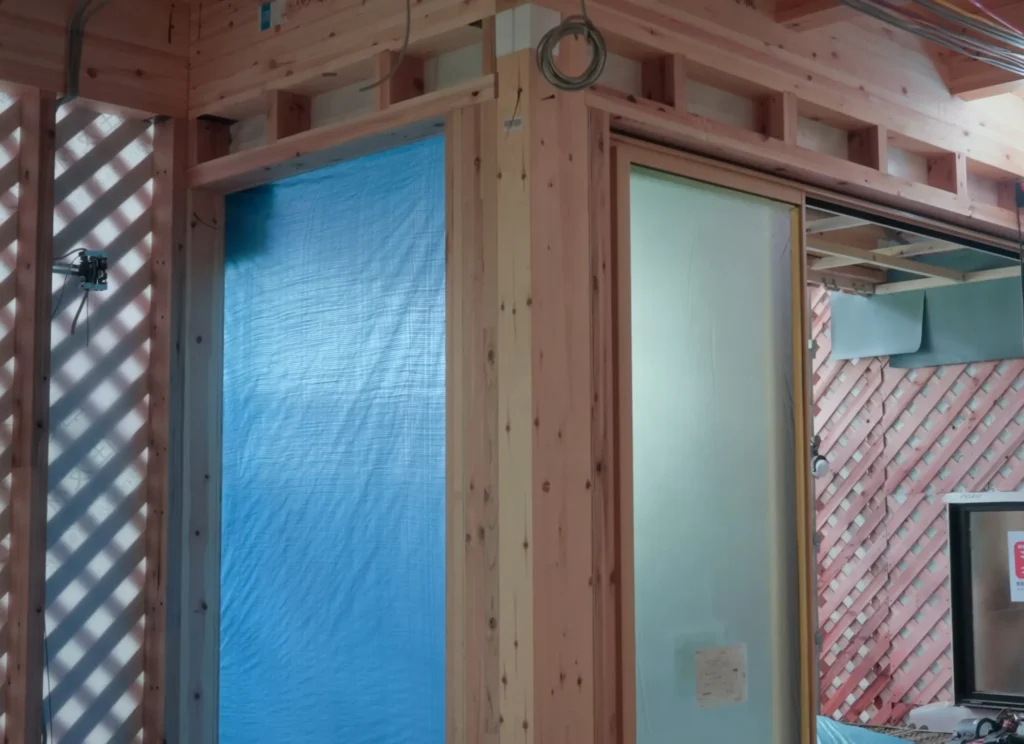
It seems quite common in custom home building that even if a design looks perfectly viable on blueprints, the manufacturer might reject it at the actual ordering stage.
If left as is, only one part of the courtyard windows would have a different height. After brainstorming with our architect, we aligned the heights by using a fixed window from a completely different manufacturer.
Sumitomo Forestry generally forbids mixing window manufacturers, but they made a special exception for us. They look virtually identical, and we are happy with the final result.
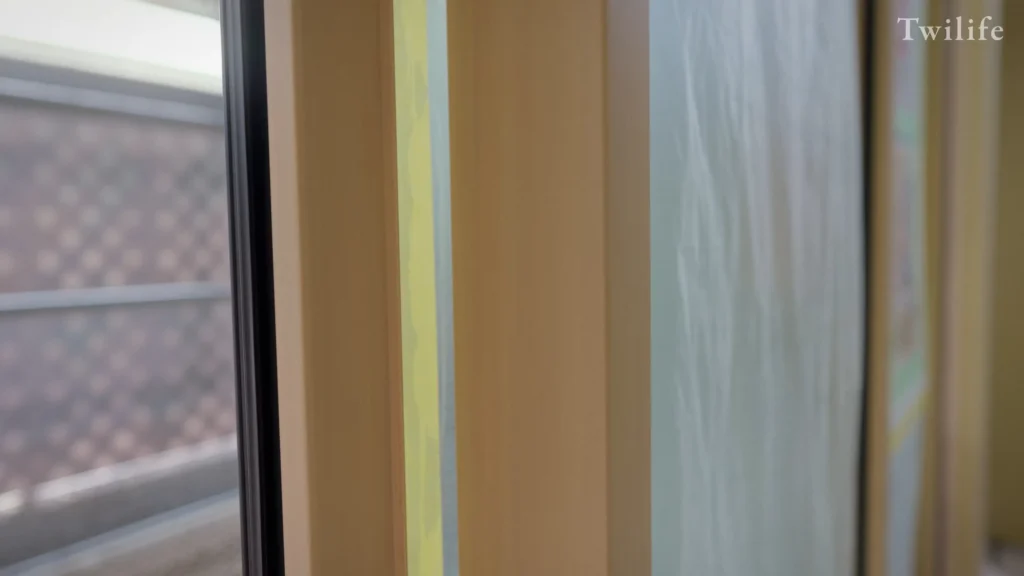
We had one more window-related mishap: We accidentally ordered the windows overlooking the courtyard in frosted glass (obscure glass).
Although we verbally requested clear glass, it was mistakenly marked as frosted on the blueprints from the beginning. It slipped past dozens of checks. Ultimately, Sumitomo Forestry kindly swapped them out for clear glass, but this taught us a valuable lesson: You must review your blueprints with fresh eyes every single time.
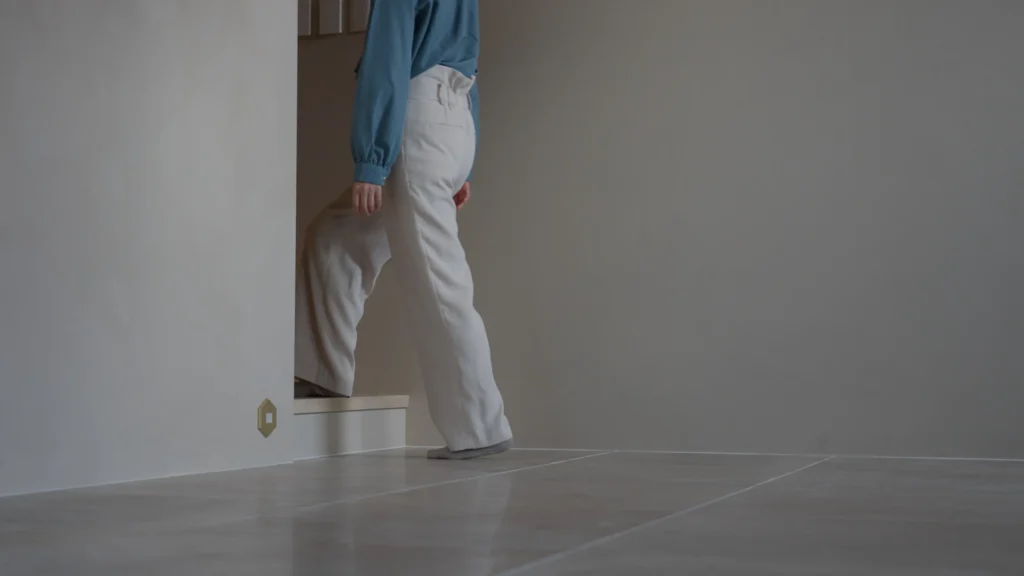
By the way, even though we opted for a “doorless” ground floor, we still needed doors for the powder room and under-stair storage.
Because we absolutely refused to have hanging walls, we came up with this hack:
- Design the floor around the stairs to be raised by one step.
- Group the raised seating area and powder room together in this elevated section.
Because the floor is raised, the distance to the ceiling is reduced. This allowed us to use the standard 2.4m doors and still achieve a “seamless, floor-to-ceiling fit.”
It’s a small detail, but I hope it helps anyone aiming for a minimalist, noise-free design.
4. Default is Still 2.4m (Speak Up Early!)
Lastly, this might sound obvious, but it’s a surprising blind spot.
It may depend on your representative, but neither our Sumitomo Forestry rep nor the Sekisui House rep we consulted ever explicitly asked, “What ceiling height would you like?”
Because of this, our initial design meetings proceeded smoothly using the default 2.4m ceiling height.
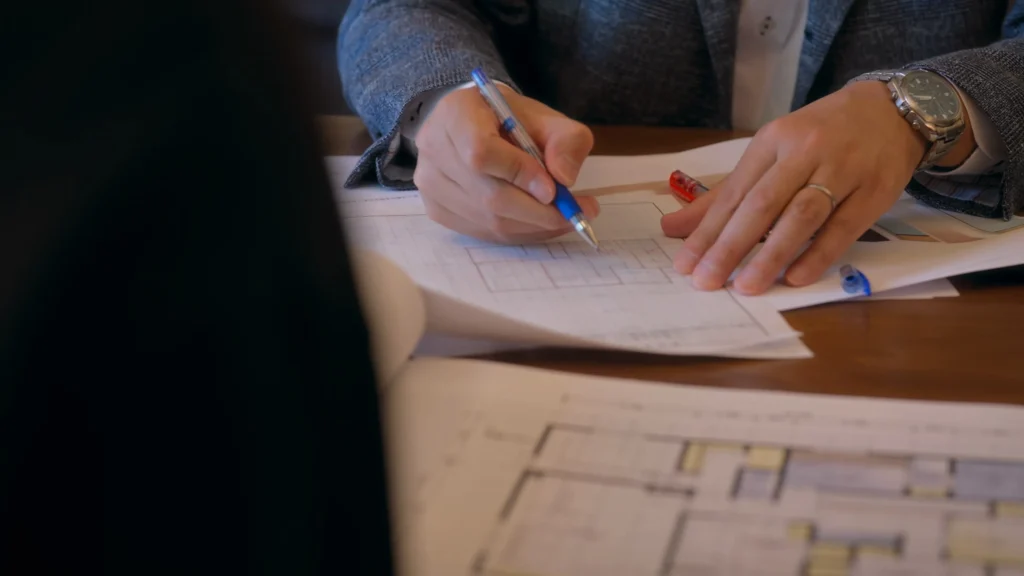
Halfway through, we suddenly realized, “Oh wait!” and requested the maximum ceiling height. The reality is that changing the ceiling height dramatically impacts your entire floor plan.
Raising the ceiling height (floor height) means the number of stair steps required to reach the second floor must increase.
More steps mean the staircase footprint gets longer, eating into your surrounding hallways and room space.
Furthermore, changing the building’s balance requires re-doing all the structural calculations from scratch.
If you say, “Actually, we want higher ceilings” at the last minute, you will have to drastically modify the ideal floor plan you’ve been perfecting.
If you are considering high ceilings, communicate your wishes to your architect and sales rep at the very earliest stage possible.
Conclusion
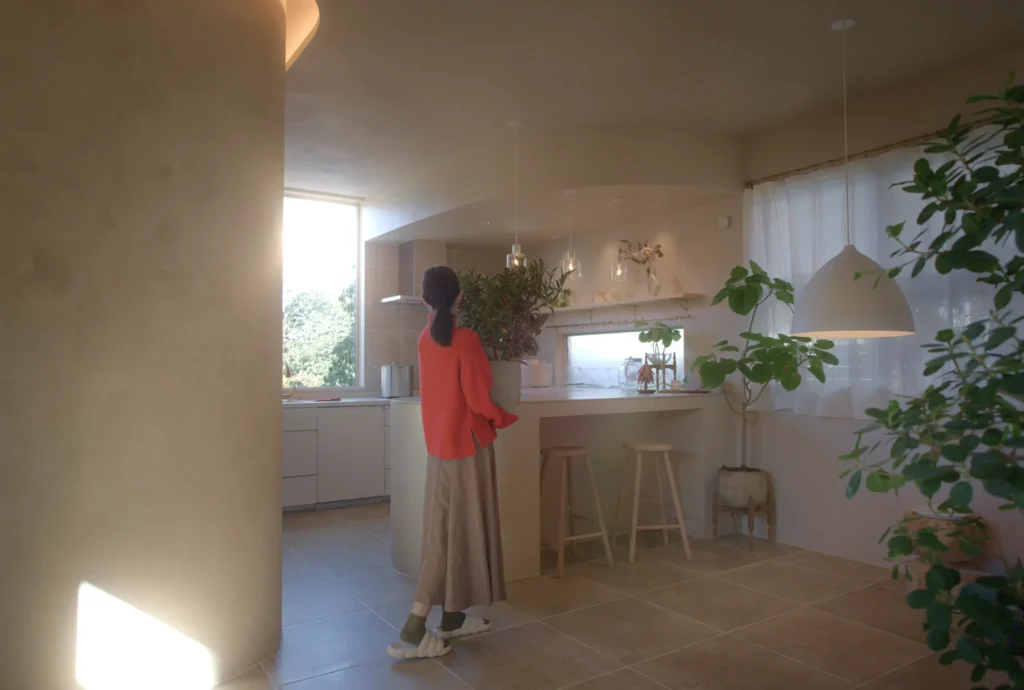
“High ceilings” provide a massive sense of openness without needing a multi-story atrium.
By utilizing vertical space, you can display tall indoor plants and arrange three-dimensional interior layouts, dramatically elevating the quality of your space.
Despite the few caveats and restrictions, it is truly an option we highly, highly recommend.
If you are planning to build a custom home, we hope our experiences help you avoid regrets and enjoy the journey of creating your ideal living space.
Thank you so much for reading!
\ The First Step to Choosing a Builder /
If you have non-negotiable conditions like “2.8m ceilings,” we recommend requesting catalogs from multiple builders at once to compare their specialties and available specs. This is exactly where our journey began!



Comments